
Alternatives to StockFit API
Explore the best alternatives and competitors to StockFit API.
Explore 20 alternatives to StockFit API. Compare features, pricing, and find the best fit for your needs.


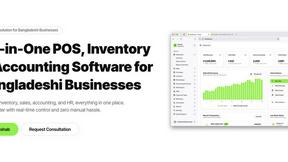
Hishab
All-in-one POS, inventory, accounting and HR software for Bangladeshi SMEs — real-time sales, stock and finance in one place.
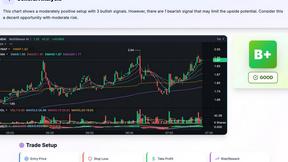
SnapPChart
AI that grades your trading chart screenshot with a letter grade, entry, stop and targets. Works for stocks, forex and crypto.
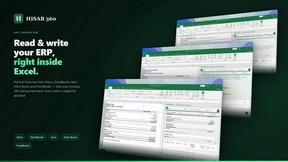

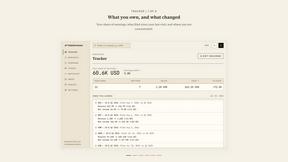

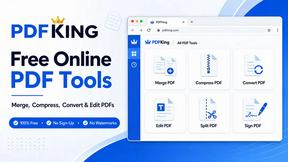
PDFKing
PDFKing is a free online PDF toolkit designed to make everyday document tasks simple, fast, and accessible. It brings essential PDF tools together in
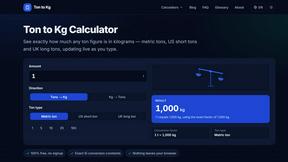
Ton to Kg Calculator
Ton To KG Calculator is a free online weight conversion tool that helps users instantly convert tons to kilograms with precision. Built with a clean.
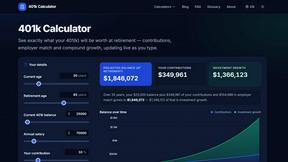
401k Calculator
401k Calculator.info is a free online tool to estimate retirement savings, employer match, and future 401(k) growth for smarter financial planning.

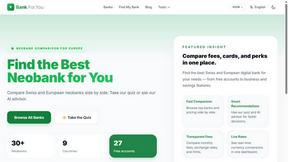
Bank.For.You
Bank.For.You helps you compare Swiss and European neobanks side by side using a quiz or AI advisor for personalized recommendations.
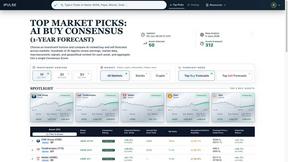
iPulse
iPulse delivers AI-driven market intelligence with real-time forecasts, signals, and risk analysis for smarter investment decisions.
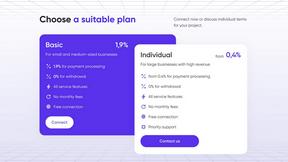
TryBit
TryBit is a crypto payment assistant that lets you accept over 40 cryptocurrencies online with low fees and volatility protection.

About StockFit API Alternatives
StockFit API is a specialized financial data platform designed for developers, quants, and research platforms that require direct, auditable access to SEC filing data. It belongs to the business and finance category of data APIs, specifically focusing on fundamental financial analysis without the noise of derived or estimated data points. Users commonly look for alternatives to StockFit API for a variety of reasons, including budget constraints where the platform’s pricing may not fit early-stage startups, or specific integration needs such as compatibility with legacy systems or preferred programming languages. Others may seek alternatives if they require different data sets, such as real-time market prices or macroeconomic indicators, which fall outside StockFit’s core focus on SEC filings and fundamentals. When evaluating an alternative, it is crucial to assess data accuracy and traceability, ensuring the source is direct rather than interpolated, as well as coverage breadth for filings, insider transactions, and fund exposures. Additionally, consider the API’s handling of complex data structures like amended filings and non-standard fiscal years, and whether the platform offers economic models or AI-friendly outputs for advanced analytical workflows. The right alternative should balance cost, data integrity, and feature depth without compromising the auditability needed for serious modeling and backtesting. The search for alternatives often stems from a desire for more flexible pricing tiers, broader asset class coverage, or simpler onboarding processes that do not require extensive technical adaptation. Some users may find that StockFit’s emphasis on SEC-derived fundamentals is too narrow for their needs, driving them toward platforms that combine multiple data sources or offer real-time and historical pricing alongside filings. When choosing an alternative, prioritize platforms that provide clear documentation, robust error handling, and support for bulk data extraction if you plan to run large-scale backtests. Also, look for transparency in how data is sourced and updated; the best alternatives will clearly state whether their numbers are direct from filings or derived through estimation, as this directly affects the reliability of your financial models. Ultimately, the goal is to find a service that aligns with your specific analytical requirements, whether that means deeper coverage of international filings, lower latency for live data, or more granular ownership and transaction details.
FAQs about StockFit API Alternatives
What is StockFit API?
StockFit API is a financial data platform built specifically for developers, quants, and research platforms who need direct, reliable access to SEC filing data. It pulls financial information directly from SEC XBRL filings, ensuring every number is traceable back to its original source without any derived middle layer. The platform covers fundamentals, ownership data, ETF and mutual fund exposure, insider transactions, and all types of filings, including complex cases like amended filings and non-December fiscal years. With over 250 million facts and 5 million filings updated daily, StockFit is designed for serious financial analysis and modeling.
Who is StockFit API for?
StockFit API is specifically designed for developers, quants, and research platforms that require clean, standardized financial data for modeling and backtesting. It is ideal for professionals building automated trading strategies, conducting fundamental analysis, or integrating auditable financial data into their applications. The platform also serves researchers and analysts who need detailed economic models per company, including competitive advantages, strategic initiatives, and failure modes. Its AI-friendly data formats make it particularly useful for teams working with large language models and advanced analytical workflows.
Is StockFit API free?
The provided content does not specify whether StockFit API offers a free tier or pricing details. It is described as filling a gap between cheap but inaccurate data tiers and expensive enterprise contracts, suggesting it likely operates on a paid subscription model. Users interested in pricing should consult the official StockFit API website or contact their sales team for current plans and potential trial options. The platform emphasizes value through high-quality, auditable data rather than free access, focusing on serious financial analysis use cases.
What are the main features of StockFit API?
StockFit API provides direct access to SEC filing data with full traceability, covering fundamentals, ownership data, ETF and mutual fund exposure, insider transactions, and all filing types. It handles complex data scenarios that other APIs ignore, such as amended filings, non-December fiscal years, and Q4 reconstructions from 10-K and 10-Q data. The platform also offers rich economic models per company, including offerings, peers, operating levers, competitive advantages, flywheels, strategic initiatives, and failure modes. For ETF and mutual fund exposure, it models mandate, portfolio construction, costs, sensitivities, and use cases in an AI-friendly format optimized for LLM workflows.